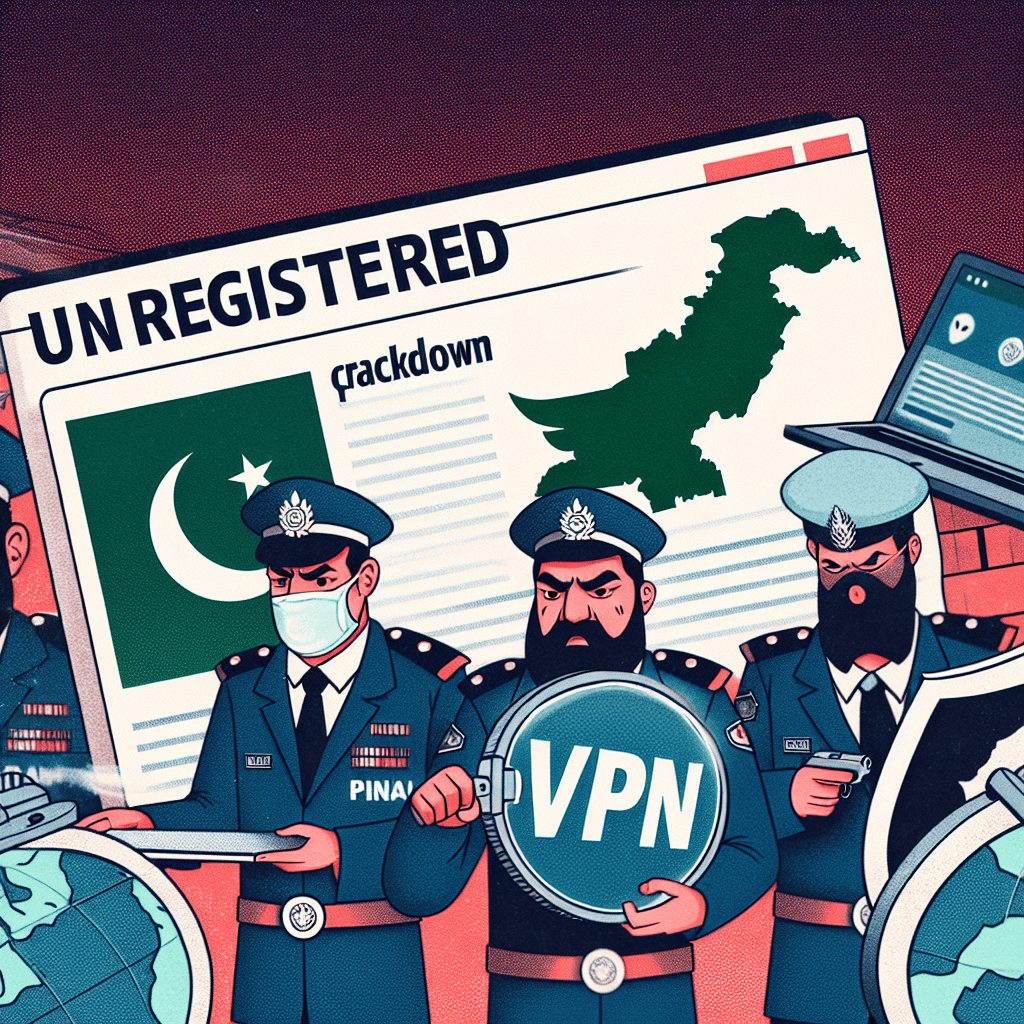
In recent developments, Pakistan has reportedly initiated a crackdown on unregistered Virtual Private Networks (VPNs) as part of its broader efforts to regulate internet usage and enhance cybersecurity within the country. This move is seen as a response to growing concerns over data privacy, cyber threats, and the use of VPNs to bypass internet restrictions. The Pakistan Telecommunication Authority (PTA) has been at the forefront of this initiative, urging individuals and businesses to register their VPNs to ensure compliance with national regulations. The crackdown aims to curb illegal online activities and ensure that internet usage aligns with the country’s legal framework, while also raising questions about the balance between security and digital freedom.
Understanding Pakistan’s Stance on Unregistered VPNs
In recent years, Pakistan has increasingly focused on regulating its digital landscape, a move that has sparked discussions about privacy, security, and freedom of expression. One of the key areas of focus has been the use of Virtual Private Networks (VPNs), particularly those that are unregistered. As the government intensifies its efforts to monitor and control internet usage, understanding Pakistan’s stance on unregistered VPNs becomes crucial.
The primary motivation behind Pakistan’s scrutiny of VPNs is rooted in national security concerns. VPNs, by their very nature, allow users to bypass local internet restrictions and access content that may be censored or blocked within the country. This capability poses a challenge for authorities attempting to regulate online content and maintain control over the digital narrative. Consequently, the government argues that unregistered VPNs could potentially be used for illicit activities, including terrorism, cybercrime, and the dissemination of misinformation.
In response to these concerns, Pakistan has introduced measures to regulate VPN usage. The Pakistan Telecommunication Authority (PTA) has mandated that all VPNs must be registered with the authority. This registration process is intended to ensure that VPN services comply with local laws and regulations, thereby allowing the government to monitor and, if necessary, restrict access to certain online content. By requiring registration, the PTA aims to create a more transparent and accountable digital environment.
However, this move has not been without controversy. Critics argue that the registration requirement infringes on individual privacy rights and stifles freedom of expression. They contend that VPNs are essential tools for protecting personal data and ensuring online anonymity, especially in a country where internet censorship is prevalent. Moreover, there is concern that the registration process could be used as a means of surveillance, allowing the government to track users’ online activities and potentially target dissenting voices.
Despite these criticisms, the government maintains that its actions are necessary to safeguard national security and public order. It emphasizes that the registration of VPNs is not intended to curtail legitimate use but rather to prevent misuse. Furthermore, authorities assert that registered VPNs will still provide users with the privacy and security benefits they seek, while also ensuring compliance with local laws.
To facilitate the registration process, the PTA has outlined clear guidelines for VPN providers and users. These guidelines include submitting relevant documentation and ensuring that the VPN service adheres to specific technical standards. By streamlining the registration process, the government aims to encourage compliance and minimize disruption for legitimate users.
As Pakistan continues to navigate the complexities of digital regulation, the debate over unregistered VPNs highlights the broader tension between security and privacy. While the government’s efforts to regulate VPNs are driven by legitimate security concerns, it is essential to strike a balance that respects individual rights and freedoms. This balance is crucial not only for fostering trust between the government and its citizens but also for ensuring that Pakistan’s digital landscape remains open and inclusive.
In conclusion, Pakistan’s stance on unregistered VPNs reflects its broader approach to digital governance. As the country grapples with the challenges of regulating an increasingly interconnected world, the ongoing dialogue between authorities, service providers, and users will play a pivotal role in shaping the future of internet freedom and security in Pakistan.
The Implications of a VPN Crackdown in Pakistan
In recent years, the use of Virtual Private Networks (VPNs) has become increasingly prevalent worldwide, serving as a tool for individuals seeking to maintain privacy and security while navigating the internet. In Pakistan, however, the government has signaled a potential crackdown on unregistered VPNs, raising significant concerns about the implications for internet freedom and privacy in the country. This move, ostensibly aimed at enhancing cybersecurity and curbing illegal activities online, has sparked a debate about the balance between national security and individual privacy rights.
To understand the potential impact of such a crackdown, it is essential to consider the role VPNs play in Pakistan. VPNs are widely used by individuals and businesses alike to bypass internet censorship, access restricted content, and protect sensitive data from cyber threats. For many Pakistanis, VPNs offer a means to circumvent government-imposed restrictions on certain websites and social media platforms, thereby enabling access to a broader range of information and communication channels. Consequently, any measures to restrict or regulate VPN usage could significantly affect how citizens interact with the digital world.
The Pakistani government’s interest in regulating VPNs is not without precedent. Similar initiatives have been observed in other countries, where authorities have sought to control VPN usage to prevent activities deemed harmful or illegal. In Pakistan, the government has expressed concerns about the use of unregistered VPNs for activities such as tax evasion, cybercrime, and the dissemination of extremist content. By requiring VPN registration, the government aims to monitor and potentially curtail these activities, thereby enhancing national security.
However, the implications of such a crackdown extend beyond security concerns. Critics argue that increased regulation of VPNs could lead to a broader erosion of internet freedom in Pakistan. By mandating registration, the government could gain greater control over online activities, potentially leading to increased surveillance and censorship. This raises questions about the extent to which individual privacy rights are being compromised in the name of security. Moreover, there is a fear that such measures could stifle innovation and economic growth, as businesses that rely on VPNs for secure communication and data protection may face additional hurdles.
Furthermore, the enforcement of a VPN crackdown presents practical challenges. The technical nature of VPNs makes it difficult to effectively monitor and regulate their usage. Users can easily switch to different VPN providers or employ other methods to mask their online activities, rendering government efforts to control VPN usage potentially ineffective. This cat-and-mouse dynamic between authorities and tech-savvy users underscores the complexity of implementing such regulations.
In light of these considerations, it is crucial for the Pakistani government to carefully weigh the benefits and drawbacks of a VPN crackdown. While the intention to enhance cybersecurity is commendable, it is imperative to ensure that measures do not infringe upon fundamental rights to privacy and freedom of expression. A balanced approach that addresses security concerns while respecting individual liberties is essential. Engaging with stakeholders, including civil society organizations, technology experts, and the business community, can help in formulating policies that are both effective and respectful of citizens’ rights.
In conclusion, the potential crackdown on unregistered VPNs in Pakistan presents a multifaceted issue with significant implications for internet freedom and privacy. As the government navigates this complex landscape, it must strive to find a solution that safeguards national security without compromising the fundamental rights of its citizens.
How a VPN Ban Could Affect Internet Freedom in Pakistan
In recent years, the global discourse surrounding internet freedom has intensified, with many countries grappling with the balance between security and privacy. Pakistan, a nation with a burgeoning digital landscape, is no exception. The government’s recent move to potentially initiate a crackdown on unregistered Virtual Private Networks (VPNs) has sparked a debate about the implications for internet freedom within the country. As VPNs are widely used to bypass geo-restrictions and maintain online privacy, their regulation could significantly impact how citizens access and interact with the internet.
To understand the potential effects of a VPN ban, it is essential to first consider the role VPNs play in Pakistan’s digital ecosystem. VPNs are commonly used by individuals and businesses alike to secure their online activities, protect sensitive data, and access content that may be restricted due to regional limitations. For many Pakistanis, VPNs serve as a vital tool for circumventing censorship and ensuring privacy in an increasingly monitored online environment. Consequently, any move to restrict or regulate these services could be perceived as a direct threat to digital freedom.
Moreover, the Pakistani government has justified the potential crackdown on unregistered VPNs by citing national security concerns. Authorities argue that unregulated VPNs can be exploited by malicious actors to conduct illegal activities without detection. While this rationale underscores the importance of maintaining national security, it also raises questions about the potential overreach of governmental powers and the risk of infringing on individual rights. The challenge lies in finding a balance that addresses security concerns without stifling the free flow of information and ideas.
In addition to security considerations, the economic implications of a VPN ban cannot be overlooked. Pakistan’s digital economy is rapidly expanding, with numerous businesses relying on VPNs to facilitate secure communication and data transfer. Restricting access to these tools could hinder business operations, particularly for companies engaged in international trade or those with remote workforces. This, in turn, could have a ripple effect on the broader economy, potentially stifling innovation and growth in the tech sector.
Furthermore, the potential crackdown on VPNs could have significant social and cultural ramifications. In a country as diverse as Pakistan, where access to information is crucial for fostering understanding and tolerance, limiting internet freedom could exacerbate existing societal divides. By restricting access to global content, the government risks isolating its citizens from the broader international community, thereby limiting exposure to diverse perspectives and ideas.
As Pakistan navigates this complex issue, it is imperative for policymakers to engage in open dialogue with stakeholders, including civil society organizations, technology experts, and the general public. By fostering a collaborative approach, the government can work towards solutions that address security concerns while preserving the fundamental principles of internet freedom. This may involve implementing a regulatory framework that ensures transparency and accountability without imposing undue restrictions on users.
In conclusion, the potential crackdown on unregistered VPNs in Pakistan presents a multifaceted challenge that requires careful consideration of security, economic, and social factors. While the government’s intentions to safeguard national security are valid, it is crucial to ensure that such measures do not come at the expense of individual freedoms and the country’s digital future. As the debate continues, the path forward will likely require a delicate balance between regulation and freedom, one that respects the rights of citizens while addressing legitimate security concerns.
Legal and Privacy Concerns Surrounding VPN Usage in Pakistan
In recent years, the use of Virtual Private Networks (VPNs) has surged globally, driven by increasing concerns over privacy and the desire to access restricted content. In Pakistan, this trend is no different, with many individuals and businesses relying on VPNs to secure their online activities and bypass internet censorship. However, the Pakistani government has expressed growing concerns over the unregulated use of VPNs, prompting discussions about potential crackdowns on unregistered services. This development raises significant legal and privacy concerns for users within the country.
The primary motivation behind the government’s scrutiny of VPNs is rooted in national security and regulatory compliance. Authorities argue that unregistered VPNs can be exploited for illegal activities, including cybercrime and terrorism. By masking users’ identities and locations, these services can potentially facilitate activities that threaten national security. Consequently, the government is considering measures to ensure that VPN usage is monitored and regulated, thereby mitigating potential risks associated with anonymity on the internet.
In this context, the Pakistan Telecommunication Authority (PTA) has been at the forefront of efforts to regulate VPN usage. The PTA has mandated that all VPNs operating within the country must be registered and approved by the authority. This move is intended to create a controlled environment where VPNs can be used legally and responsibly. However, this requirement has sparked a debate about the balance between security and privacy, as well as the implications for internet freedom.
Critics of the government’s approach argue that mandatory registration of VPNs could infringe on individuals’ rights to privacy and freedom of expression. VPNs are often used by journalists, activists, and ordinary citizens to protect their communications from surveillance and to access information freely. By imposing strict regulations, there is a concern that the government may be overstepping its bounds, potentially stifling dissent and limiting access to information. This tension between security and privacy is a common theme in discussions about internet governance worldwide.
Moreover, the technical feasibility of enforcing a crackdown on unregistered VPNs presents its own set of challenges. VPN technology is inherently designed to circumvent restrictions, making it difficult for authorities to effectively block or monitor these services. Users can easily switch to different servers or providers, complicating efforts to enforce compliance. This raises questions about the practicality of implementing such regulations and whether they would achieve the desired outcomes.
In addition to these concerns, there are economic implications to consider. Many businesses in Pakistan rely on VPNs to secure their communications and protect sensitive data. A crackdown on unregistered VPNs could disrupt business operations, particularly for companies that engage in international trade or have remote workforces. Ensuring that businesses can continue to operate securely and efficiently is crucial for the country’s economic stability.
In conclusion, the potential crackdown on unregistered VPNs in Pakistan highlights the complex interplay between security, privacy, and internet freedom. While the government’s intentions to safeguard national security are understandable, it is essential to carefully consider the broader implications of such measures. Striking a balance that respects individual rights while addressing legitimate security concerns is a challenge that requires thoughtful deliberation and collaboration between stakeholders. As the situation evolves, it will be important to monitor how these legal and privacy concerns are addressed and what impact they will have on the digital landscape in Pakistan.
The Role of VPNs in Pakistan’s Digital Landscape
Virtual Private Networks (VPNs) have become an integral part of Pakistan’s digital landscape, offering users a means to bypass internet censorship, enhance privacy, and access restricted content. In a country where internet freedom is often curtailed by governmental regulations, VPNs serve as a crucial tool for individuals seeking to maintain their digital autonomy. However, recent developments suggest that Pakistan may be initiating a crackdown on unregistered VPNs, raising concerns about the future of internet freedom in the nation.
To understand the significance of VPNs in Pakistan, it is essential to consider the broader context of internet usage in the country. Pakistan has a rapidly growing digital population, with millions of users accessing the internet for various purposes, ranging from social media engagement to e-commerce. Despite this growth, the government has imposed stringent regulations on internet usage, often citing national security and moral concerns. These regulations include the blocking of certain websites and social media platforms, which has led many users to turn to VPNs as a means of circumventing these restrictions.
VPNs work by encrypting a user’s internet connection and routing it through a server located in a different geographical location. This process not only masks the user’s IP address but also allows them to access content that may be restricted in their region. For Pakistani users, this means the ability to access a wider range of information and services, which is particularly important in a country where media freedom is often limited.
However, the increasing reliance on VPNs has not gone unnoticed by the Pakistani government. In recent years, there have been growing concerns about the use of VPNs for illegal activities, such as accessing banned content or engaging in cybercrime. In response, the government has proposed measures to regulate the use of VPNs, including requiring users to register their VPN services with the Pakistan Telecommunication Authority (PTA). This move is part of a broader effort to enhance cybersecurity and ensure compliance with national laws.
The potential crackdown on unregistered VPNs has sparked a debate about the balance between security and privacy. On one hand, proponents argue that regulating VPNs is necessary to prevent their misuse and protect national security. They contend that unregulated VPNs can be exploited by malicious actors to conduct illegal activities without detection. On the other hand, critics argue that such measures could infringe on individual privacy rights and stifle internet freedom. They express concerns that mandatory registration could lead to increased surveillance and censorship, undermining the very purpose of using a VPN.
As Pakistan navigates this complex issue, it is crucial to consider the implications for both users and service providers. For users, the potential crackdown could mean limited access to VPN services, which may impact their ability to access information freely and securely. For service providers, compliance with registration requirements could pose logistical challenges and raise questions about data privacy and user confidentiality.
In conclusion, the role of VPNs in Pakistan’s digital landscape is multifaceted, serving as both a tool for empowerment and a potential security risk. As the government considers measures to regulate their use, it must carefully weigh the need for security against the fundamental rights of privacy and freedom of expression. The outcome of this debate will have significant implications for the future of internet freedom in Pakistan, shaping the digital experiences of millions of users across the country.
Alternatives to VPNs for Secure Internet Access in Pakistan
In recent years, the use of Virtual Private Networks (VPNs) has become increasingly popular in Pakistan, primarily due to concerns over privacy, security, and access to restricted content. However, with the government’s recent focus on regulating internet usage, there is growing speculation that a crackdown on unregistered VPNs may be on the horizon. This potential development has prompted many internet users to explore alternative methods for secure internet access that do not rely on VPNs.
One viable alternative to VPNs is the use of proxy servers. Proxy servers act as intermediaries between a user’s device and the internet, allowing users to access websites indirectly. By routing internet traffic through a proxy server, users can mask their IP addresses, thereby enhancing their online privacy. Although proxy servers do not offer the same level of encryption as VPNs, they can still provide a degree of anonymity and are often easier to set up. Moreover, some proxy services offer additional features such as ad-blocking and malware protection, which can further enhance the user’s browsing experience.
Another option for secure internet access is the use of the Tor network. Tor, short for The Onion Router, is a free and open-source software that enables anonymous communication by directing internet traffic through a worldwide network of volunteer-operated servers. This process conceals a user’s location and usage patterns, making it difficult for third parties to track online activities. While Tor is renowned for its robust privacy features, it is important to note that it may not be suitable for all users due to its slower connection speeds and potential compatibility issues with certain websites.
For those seeking a more straightforward approach, encrypted messaging apps can serve as an effective means of secure communication. Applications such as Signal and WhatsApp offer end-to-end encryption, ensuring that messages can only be read by the intended recipients. This level of security can be particularly valuable for individuals who prioritize the confidentiality of their communications. Additionally, many of these apps are user-friendly and widely available, making them accessible to a broad audience.
Furthermore, adopting good cybersecurity practices can significantly enhance online security without the need for VPNs. Regularly updating software and operating systems, using strong and unique passwords, and enabling two-factor authentication are all effective strategies for protecting personal information. By staying informed about the latest cybersecurity threats and taking proactive measures, users can mitigate the risks associated with internet usage.
In addition to these alternatives, it is crucial for internet users in Pakistan to remain informed about the evolving regulatory landscape. Understanding the legal implications of using certain technologies can help individuals make informed decisions about their online activities. Engaging with digital rights organizations and participating in discussions about internet freedom can also contribute to a more informed and empowered user base.
In conclusion, while the potential crackdown on unregistered VPNs in Pakistan may pose challenges for internet users, there are several viable alternatives for maintaining secure internet access. By exploring options such as proxy servers, the Tor network, encrypted messaging apps, and adopting robust cybersecurity practices, individuals can continue to protect their privacy and security online. As the digital landscape continues to evolve, staying informed and adaptable will be key to navigating the complexities of internet usage in Pakistan.
Q&A
1. **What is the reason behind Pakistan’s crackdown on unregistered VPNs?**
Pakistan is initiating a crackdown on unregistered VPNs to enhance cybersecurity, prevent illegal activities, and ensure compliance with local regulations.
2. **Which authority is responsible for regulating VPN usage in Pakistan?**
The Pakistan Telecommunication Authority (PTA) is responsible for regulating VPN usage in the country.
3. **What are the potential consequences for using an unregistered VPN in Pakistan?**
Users of unregistered VPNs may face fines, legal action, or internet service disruptions as part of the crackdown.
4. **How can individuals or businesses register their VPNs in Pakistan?**
Individuals or businesses can register their VPNs by submitting an application to the Pakistan Telecommunication Authority, providing necessary details and justifications for VPN usage.
5. **What impact might this crackdown have on businesses operating in Pakistan?**
Businesses may experience increased compliance costs and operational challenges, but it could also lead to improved cybersecurity and data protection.
6. **Are there any exceptions to the VPN registration requirement in Pakistan?**
Certain government agencies and organizations with specific security needs may be exempt from the registration requirement, subject to approval by the relevant authorities.Pakistan has been taking steps to regulate internet usage and enhance cybersecurity, which includes initiatives to crack down on unregistered VPNs. The Pakistan Telecommunication Authority (PTA) has been actively working to ensure that VPNs used within the country are registered and compliant with local regulations. This move is part of broader efforts to control internet traffic, prevent illegal activities, and ensure national security. However, such measures have raised concerns about privacy and freedom of expression among citizens and digital rights activists. The crackdown on unregistered VPNs reflects Pakistan’s attempt to balance security needs with the rights of internet users, though it continues to be a contentious issue.